PlacesMallorca
Palma old town apartments and the parking problem
All year
The flat is in a seventeenth-century townhouse three minutes from the cathedral. The street is four metres wide, camera-controlled, and you have a hire car arriving at eleven at night. How parking actually works in central Palma, what the listings mean by "parking", and the arrival plan that avoids a fine you find out about in October.

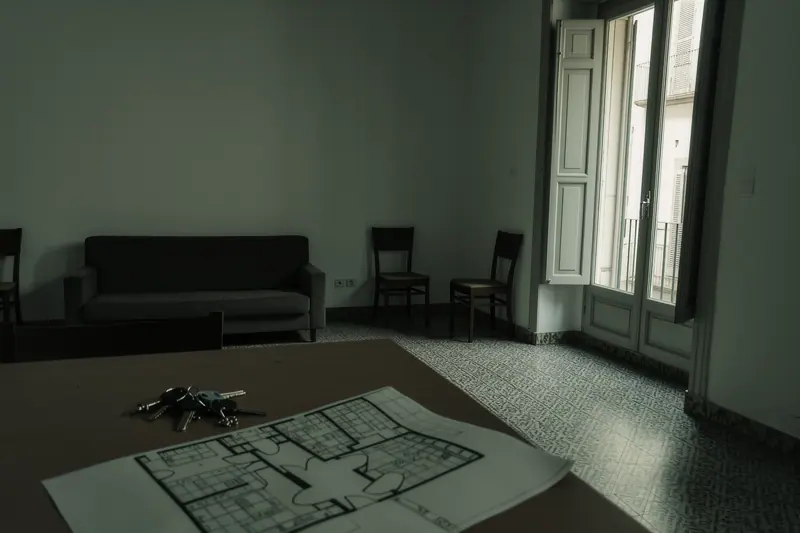
The apartment is beautiful. Tiled floors, a beamed ceiling, tall shutters onto a street so narrow that the buildings almost touch overhead, and a five-minute walk to everywhere in the old town worth walking to. You book it, then book a hire car because you also want to see the rest of the island, and that is where a straightforward holiday quietly acquires a problem.
Palma’s centre is a medieval street plan with a modern access-control system laid over the top. It works well. It is not designed for someone arriving at eleven at night with a suitcase and a car they collected an hour ago.
The restricted streets, and the fine that finds you
Parts of central Palma operate as controlled-access areas where only permitted vehicles may enter, monitored by camera. The purpose is obvious once you see the streets: they are the width of a cart, and a delivery van in the wrong place stops the district.
For a visitor the mechanics matter more than the policy. Entering a controlled street without authorisation produces a penalty notice sent to the registered keeper of the vehicle. With a hire car, the company identifies you as the driver, adds an administration charge for doing so, and the whole thing reaches you long after the holiday. There is no warning at the time, and nothing on the street tells you that you have just made a mistake.
Some hosts can arrange a temporary authorisation for a guest vehicle and many cannot. The only safe approach is to ask, before booking a car, whether the street is inside a controlled zone and whether authorisation is possible.
What “parking” means in a listing
| What the listing says | What it usually is | What to ask |
|---|---|---|
| Parking included | A numbered space in a communal garage | Address, dimensions, walking distance |
| Private garage | A single door onto a street, often very tight | Height, length, and whether it is a car lift |
| Parking nearby | A public car park you pay for | Which one, and the daily cap |
| Resident permit available | A permit for on-street bays in the zone | Whether guests genuinely qualify |
| No parking | Honest | Whether you need a car at all |
The two words that hide the most are “included” and “private”. Old Palma buildings were not built with garages, so the ones that exist have been cut into courtyards, cellars and former stables. A surprising number are reached by a ramp with a blind turn, or by a car lift with a stated length and weight limit, and the space at the bottom will take a small hatchback and nothing else.
If you have booked an estate because you are bringing golf clubs or a bike bag, measure before you commit. The alternative is discovering it at midnight with a queue of one behind you.
The arrival plan
This is worth thinking through once, in advance, and it takes five minutes.
- Decide whether the car exists on day one. The airport bus runs into the centre and is the easiest possible arrival. Collecting the car on the morning you actually leave the city removes the entire problem and usually saves two days of rental.
- If the car does exist, find the legal stopping point. Almost every old town address has somewhere on a larger street within a hundred metres where a short stop to unload is tolerated. The host knows where it is. Ask them.
- Unload first, park second. One person stays with the luggage, one takes the car to the garage or the public car park. Trying to do both with a car half-blocking a lane is how tempers and wing mirrors get damaged.
- Confirm the key handover time. Old town lets are frequently handed over in person rather than by keybox, and a late flight needs to be flagged.
The maths that usually settles it
Work out how many days you will actually drive. For a week in Palma the honest answer for most visitors is two or three: a day in the Tramuntana, a day on the east coast, perhaps a day at a beach.
Now compare. Keeping a car for seven days means seven days of rental, seven nights of parking, and the access problem every time you come home. Hiring one on two separate days from a depot in the city — of which there are several outside the controlled zone — costs two days of rental, no parking, and no camera risk. Unless you are making long trips daily, the second option wins comfortably, and it is what people who live in the centre effectively do.
For the days in between, the city is genuinely better without a car. It is flat, compact and walkable, and if you want to cover more ground the seafront cycle route reaches Portixol and beyond without ever putting you in traffic.
The thing to get right
Book the flat first and the car second, not the other way round, and make the parking question part of choosing the flat rather than a detail you resolve afterwards.
An otherwise identical apartment two streets outside the controlled area, with a garage you can actually reach, is worth more than a marginally prettier one inside it. And if you find the perfect place with no parking at all, take it — then plan the week around not having a car, which on this island is a much easier thing to do from Palma than from anywhere else.
What to check before you book
- Ask whether the street is inside a restricted-access zone, and get the answer from the owner in writing before you book a car.
- If parking is "included", ask for the address of the space, its dimensions, and how far it is from the door on foot.
- Check the garage height and length limits. Many central Palma garages were cut into old buildings and take a small car only.
- Agree an arrival plan: where you may legally stop to unload, for how long, and who meets you with the keys.
- Ask whether the building has a lift. Three floors of a townhouse staircase with a week’s luggage is a real consideration.
- Price a monthly space in a public car park against the days you will actually use the car. It is often cheaper to hire a car twice than to park one all week.
Questions people actually ask
- Can I drive to my apartment in Palma old town?
Sometimes, briefly, and often not at all. Several central districts operate as restricted-access zones where only authorised vehicles may enter, enforced by camera. Some lets can arrange temporary authorisation for a guest vehicle and many cannot. Ask before you arrive, because the penalty for guessing arrives weeks later through the hire company.
- What does "parking included" mean in a Palma listing?
Usually a numbered space in a communal garage, which may be in the building, around the corner, or a ten-minute walk away. Occasionally it means a permit for a residents’ zone, which is a different thing again. Ask for the address and the dimensions of the space, and be specific about the size of car you are bringing.
- How much is parking in central Palma?
Public car parks in the centre charge by the hour with daily caps, and rates climb in high season; a week adds up to a meaningful share of what the flat costs. Monthly rates in some garages work out far cheaper per day than the tourist daily rate, so if you are staying two weeks or more it is worth asking about one.
- Do I need a car in Palma at all?
For the city, no. Palma is compact, largely walkable, well served by buses, and the airport is a short bus ride from the centre. A car earns its keep only on the days you leave the city, which is why hiring one for those specific days from a town depot is usually smarter than keeping one parked all week.
- Will I get a fine, and when would I know?
If you enter a controlled street without authorisation, a camera records it and the penalty reaches the registered keeper. With a hire car that means the rental company identifies you, charges an administration fee, and you learn about it weeks or months after you flew home. It is the single most avoidable expense of a Palma stay.