On the roadMallorca
Renting a car for the Serra, or staying on the coast
All year
Whether to hire a car on Mallorca is really two questions: what you can reach without one, and what the mountains demand from the one you take. The island has a genuinely useful rail and bus network along a few corridors and nothing at all off them. Here is where the line falls, and the booking pattern that costs least.

The default assumption is that you hire a car for the whole stay. On this island that is often the wrong shape, because Mallorca has a public transport network that is genuinely useful along about four corridors and completely absent everywhere else.
The useful version of the question is not “car or no car”. It is: which days do I need one, and how small can it be.
What you can reach without a car
More than the guidebooks imply, and all of it concentrated.
- Palma to Sóller by the narrow-gauge train, then the tram down to the harbour. Around an hour, through the mountains, and the best rail journey in the Balearics.
- Palma to Inca, Sa Pobla and Manacor on the regular rail lines, which put the central towns and the Wednesday market at Sineu within reach with a change.
- The airport, Palma and the Playa de Palma on frequent city and airport buses.
- The northern resorts — Alcúdia, Port de Pollença, Can Picafort — linked to each other and to Palma by intercity coach.
- The coast by water. Excursion boats along the north-west coast and out of the northern bay reach places the roads do not, including Sa Calobra.
What that covers is Palma, the Sóller valley, the north-eastern resorts and the towns along the rail spine. What it does not cover is the entire west coast between Andratx and Sóller, the inland villages, the Llevant peninsula, and almost every cala worth the walk.
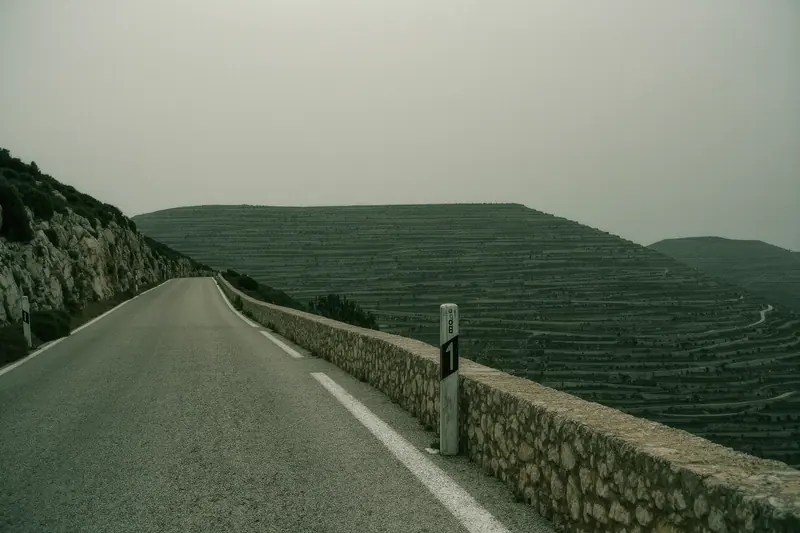
What the Serra demands from the car
If the mountains are on your list, the vehicle choice narrows.
Width is the whole story. The Ma-10 and the roads feeding it are two lanes by designation and rather less than that in practice, bordered by dry stone walls that have been there for centuries and are not going to move for you. Coaches use the same road. Passing one on a bend in a small hatchback is a manoeuvre; passing one in a large SUV is an event.
Ground clearance matters second, and only if you intend to use unsurfaced approaches — the tracks down to some of the northern and eastern coves. Check whether they are excluded from your cover before you drive one, because frequently they are.
Automatic versus manual is worth a thought if you are not used to hill starts on a gradient with a car behind you. There are a lot of those on the way up to Valldemossa.
The split hire, which is what to actually do
| Where you are staying | Days you need a car | Best arrangement |
|---|---|---|
| Central Palma | 2–3 | Town depot, collect on the morning you leave the city |
| Port de Sóller | 2 | Local hire for the Serra days, tram and train otherwise |
| Alcúdia or Port de Pollença | 3–4 | Airport pickup, or local depot plus scooter |
| An inland finca | Every day | Airport pickup, whole stay |
| A south-east cala | 4–5 | Airport pickup, whole stay |
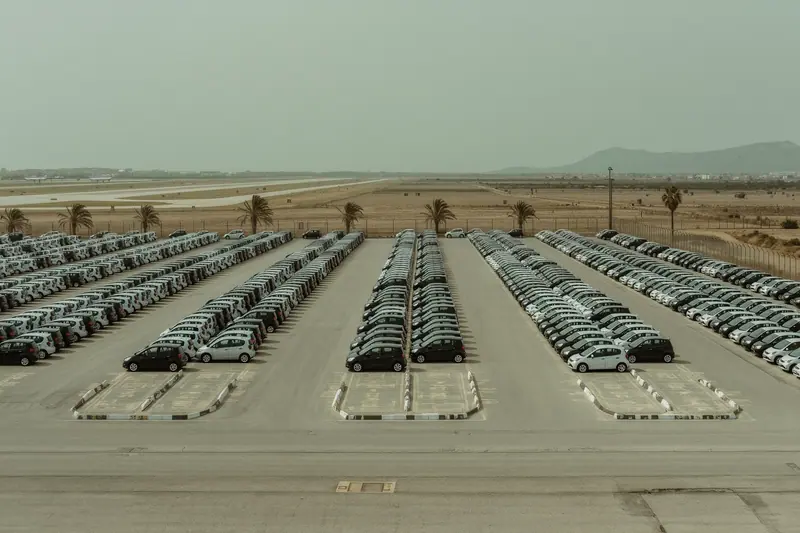
The pattern worth noticing is the first row. Keeping a car in central Palma for a week costs you parking every night, gives you a vehicle you cannot drive into the old town, and buys you nothing on the days you are walking around the city. Collecting a car from a town depot for the two or three days you actually leave Palma is usually cheaper overall than a week’s hire from the airport, and it removes the shuttle from both ends of your trip.
The counter-argument is availability. In August the town depots are small and they sell out, so the split only works if you book it in advance like everything else on this island.
Staying coastal, honestly
There is a version of a Mallorca holiday that does not involve a car at all, and it is a good one. Base yourself in Port de Sóller or Port de Pollença, walk, use the tram, take a boat along the coast, and let the island come to you. In Sóller’s case you have a mountain village, a harbour, a coastal path and a train through the Serra without ever turning a key.
The thing you lose is the interior. The villages between Sineu and Petra, the wine country around Binissalem, the hill towns at Alaró and Orient — these are the parts of Mallorca that look nothing like the brochure and they are all car-only.
The recommendation
Hire a car if the Serra, the interior or the small calas are the reason you are coming. Hire it small, hire it for the days you need rather than the days you are here, and book it early because the island fleet is finite.
Skip it if your week is one town and its beaches, and spend the money on a boat day or a couple of taxis instead. The one arrangement to avoid is the seven-day airport hire that spends five of those days parked at a hotel while you swim — which is, unfortunately, the most commonly booked arrangement on this island.
What to check before you book
- Count the days you will actually drive before you book seven. A three-day hire from a town depot is often cheaper than a week from the airport plus parking.
- Check what parking costs at your accommodation. In Palma and the coastal towns it is frequently a daily charge on top of the hire.
- Book the smallest car that fits the party if the Serra is on the itinerary. Width matters more than power on the Ma-10.
- Ask whether unsurfaced roads are excluded from the cover. Several coastal and inland tracks on this island are, and it is where damage happens.
- If you are staying in central Palma, confirm whether your street is inside a restricted-traffic zone before you plan to park outside it.
- Compare the airport rate against a town depot for the same car. The gap is often large enough to pay for the taxi.
Questions people actually ask
- Do you need a car in Mallorca?
Not to have a good week on the coast, and yes to see the island. Palma, the Sóller valley, Inca and the northern towns are linked by train, tram and bus, and the beach resorts have frequent local services. Everything else — the inland villages, most of the calas, the mountain road, the Llevant peninsula — needs a car. The honest answer for most visitors is that they need one for two or three days rather than seven.
- What size car should you hire for the Serra de Tramuntana?
A small hatchback. The mountain roads are narrow, walled and busy with coaches in season, and the constraint is the width of your vehicle rather than its engine. A compact car makes the Ma-10 relaxed and fits the parking in Valldemossa and Deià, both of which are tight. Anything large turns the same drive into concentration.
- Is the train from Palma to Sóller worth taking?
Yes, as an experience rather than as transport. The narrow-gauge line climbs through the Serra with tunnels and a viaduct and takes about an hour, and the tram at the far end runs down to the harbour. It is slower and more expensive than driving, and it is one of the few journeys on this island where that does not matter.
- Can you reach the calas without a car?
Some of them, in season. The larger resort beaches have bus services and the boat excursions along the coast cover more than people expect. The small ones — Cala Varques, Cala Torta, the coves below Santanyí — are essentially car-only, and several of those need a walk from the car as well. If those are the reason you came, hire something.